Discoloration on the Floor, Moisture at the Baseboard: Reading the Signs Early
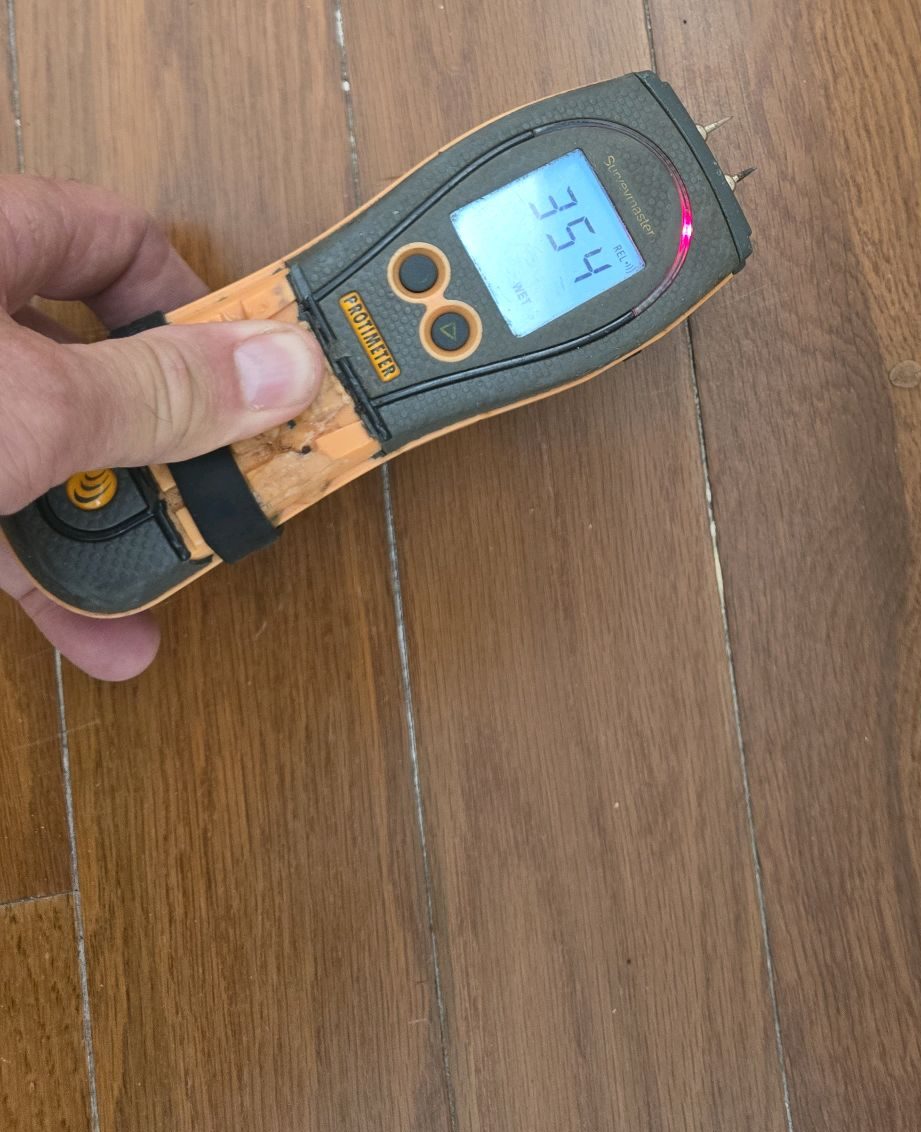
Discoloration on the engineered wood flooring near an interior baseboard, with elevated moisture readings at the same spot. Outside, exterior ground cover and decorative rock were sitting in direct contact with the stucco wall in that area.
Jacksonville's humidity, high water table, and heavy rain events make wall-to-ground clearance one of the most common things that quietly goes wrong — soil or rock piled against stucco lets moisture wick straight into the wall assembly.
Caught early, this is usually a drainage-and-clearance fix. Left alone, sustained moisture at a floor or wall assembly can damage finish materials and framing and create conditions favorable to microbial growth — a bigger, costlier conversation.
Get a qualified contractor or moisture specialist to identify the intrusion source (often as simple as pulling grade or rock back from the wall) and probe the wall cavity where needed before deciding on repairs.
Very common in Jacksonville-area homes with stucco exteriors and older or minimal grading. Industry guidance calls for real clearance between ground cover and stucco specifically because contact like this is such a frequent contributor to moisture problems.
Not a foundation crisis — but exactly the kind of finding that's cheap to fix now and expensive to ignore.
If you're looking at an older Jacksonville home, it's worth knowing its history before you commit.
Look it up on PermitSearch → (opens in a new tab)