Your AC Still Runs on R-22? Here's What That Actually Means
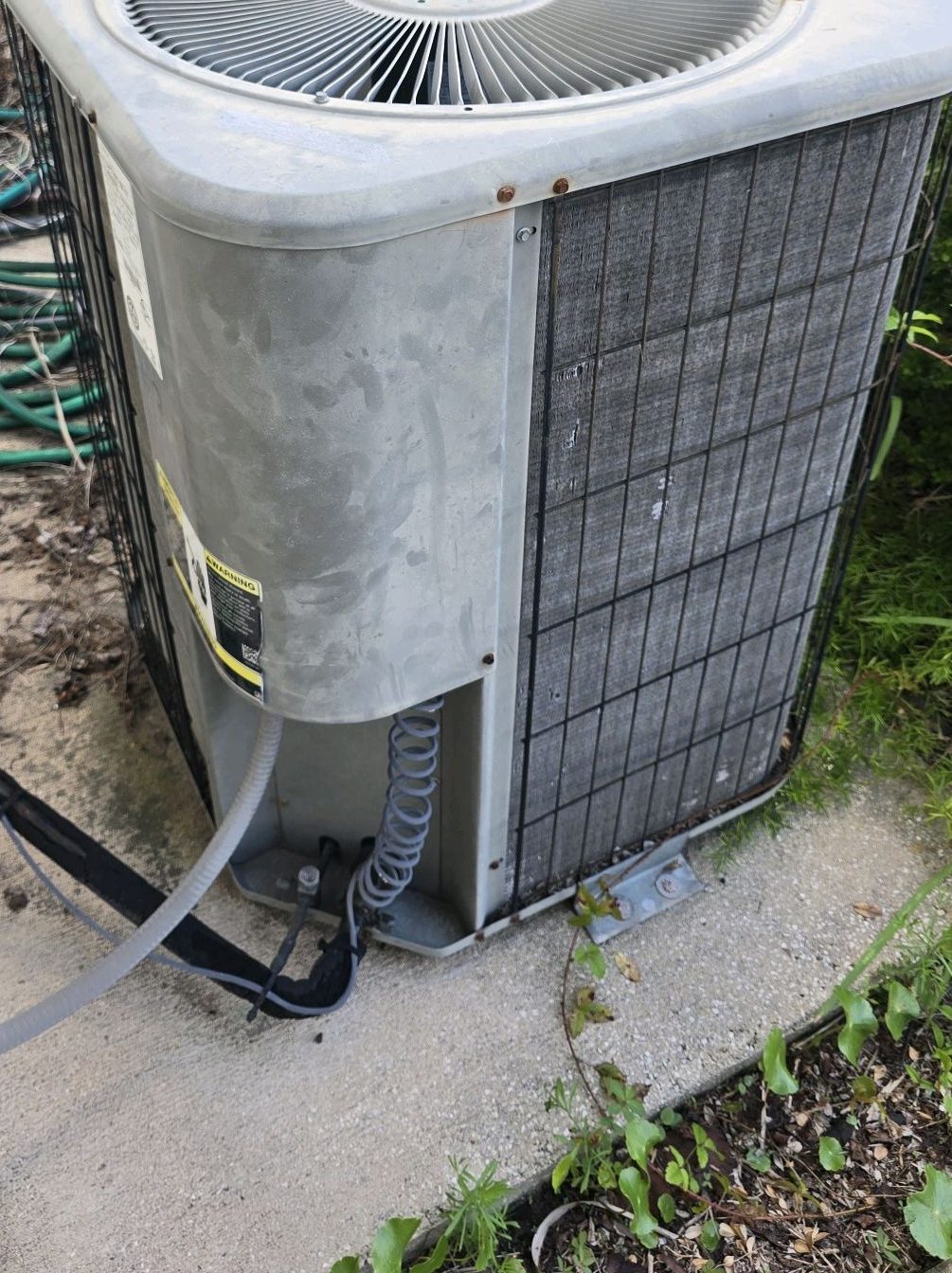
An outdoor condensing unit manufactured in the mid-2000s, still running on R-22 refrigerant, tested as operational and performing satisfactorily on the day of the inspection.
R-22 (often called Freon) was the standard home air-conditioning refrigerant for decades. The EPA phased out its production and import as of January 1, 2020 under the Clean Air Act, so any system installed before that cutoff was very likely charged with it.
A system like this can run fine right now, but it carries real future cost: R-22 is no longer manufactured, so a refrigerant leak down the road means sourcing increasingly scarce reclaimed R-22 at a steep price, or replacing the system outright. Industry consensus generally treats HVAC equipment beyond 15 years as approaching end-of-life regardless of refrigerant type.
Budget for eventual replacement, and have a licensed HVAC contractor assess the system's remaining service life and the cost of moving to a modern refrigerant platform — before a mid-summer breakdown forces the decision.
Very common in Jacksonville-area homes with original or first-replacement HVAC systems from the 2000s or earlier. We note refrigerant type on every inspection because of how directly it affects future repair cost.
Not a reason to walk away — but exactly the kind of number worth knowing before you close, not after the compressor fails in August.
Curious what's on record for a specific address?
Look it up on PermitSearch → (opens in a new tab)